
Banaszak: EU’s civil protection resilience must be built locally
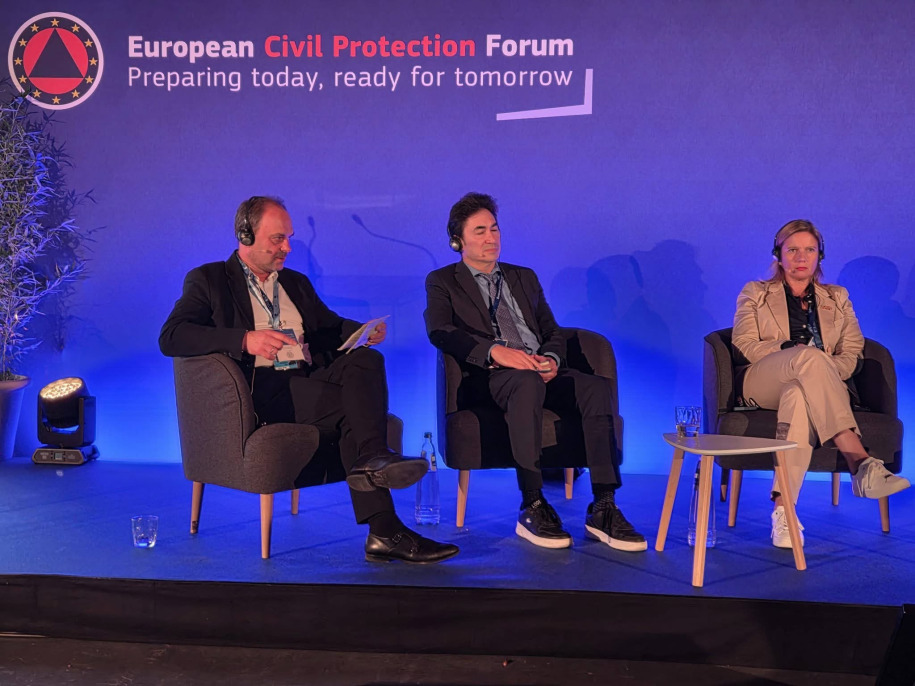
Local and regional authorities must have a stronger voice in European civil protection policy, with their experience shaping preparedness strategies, investment priorities and emergency response capacities. This was the key message of Adam Banaszak, European Committee of the Regions (CoR) Rapporteur on Civil Protection, at the EU Civil Protection Forum organised by UNDRR on 3 November in Brussels. Speaking during the session “Scaling local civil protection through city networks and EU partnerships”, he called for local and regional authorities to be fully involved in the development, implementation and governance of prevention, preparedness and response strategies. Building on the CoR’s recent opinion on the Union Civil Protection Mechanism, he stressed the need to systematically feed local risk assessments and lessons learned from disasters into national and European decision-making: “centralising preparedness means preparing to fail.” – he said. Stronger cooperation between cities and regions, including through a proposed European Network for Regions Affected by Disasters, would help turn local experience into shared knowledge and more effective European Union action.
Banaszak also underlined that resilient communities are built with citizens, not simply protected by public authorities. Local governments are uniquely placed to engage residents through community exercises, school programmes, trained volunteer networks and accessible risk communication tailored to local needs. Preparedness must be inclusive, involve civil society organisations and ensure that vulnerable communities are not left behind. With 63% of Europeans trusting local and regional authorities more than any other level of government, this proximity is a strategic asset for strengthening public confidence and crisis readiness. His message is clear: European Union must connect empowered communities, capable local governments and a European system that listens and learns. City networks and EU partnerships can spread good practices, mobilise expertise and provide resources, but it is local leadership that turns these efforts into preparedness on the ground.