
Karolien Grosemans discusses Skills for the Future with Irish Presidency Minister Marian Harkin in SEDEC
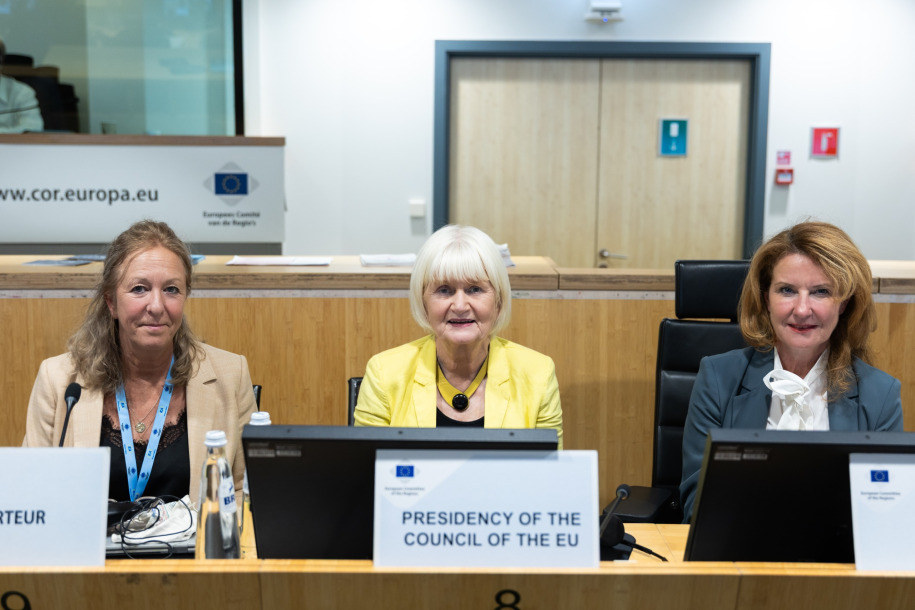
Brussels – EA Group member Karolien Grosemans presented her opinion on Skills for the Future during Wednesday’s meeting of the SEDEC commission. The opinion, requested by the Irish Presidency of the Council of the EU, focuses on how Europe can better prepare its citizens and regions for rapid technological, economic and demographic change. Appointed rapporteur-general for the file in June, Grosemans worked on the opinion over the summer under a particularly tight timeframe. It is her first opinion since joining the European Committee of the Regions.
The labour market is changing rapidly, not least because of the development of artificial intelligence (AI) and other new technologies. Rather than trying to predict exactly which jobs will exist in the future, Grosemans’ opinion focuses on giving people the skills they need to adapt to these changes throughout their lives.
Grosemans explained her approach: “Europe’s future depends on whether people have the skills to adapt to a rapidly changing world. That starts with strong basic skills and continues throughout life. Regions and cities are essential in bringing education, training and employers together, so that opportunities reach people wherever they live.”
Strong regional skills ecosystems
According to Grosemans, a key element of her opinion is the role of local and regional authorities in bringing together education, training and the labour market. Her opinion therefore calls for stronger regional skills and innovation ecosystems, bringing together key stakeholders such as schools, vocational education providers, universities, employers, SMEs and employment services.
Particular attention is also given to AI literacy, STEM education and lifelong learning. While Europe will need more specialists in areas such as AI and other advanced technologies, technological change will affect virtually every sector of the economy. People therefore need opportunities to continuously update their skills throughout their careers.
No region left behind
At the same time, Grosemans stressed that the AI revolution should not lead to greater disparities between regions across the EU. She explained: “Access to talent, education and innovation infrastructure remains uneven across Europe. Rural and remote areas, border regions and regions in transition must be taken into account when developing a successful European skills policy.”
Grosemans concluded that Europe’s competitiveness will depend not only on its ability to develop new technologies, but also on whether people, businesses and regions across Europe have the skills and opportunities to benefit from them.
Exchange with Irish Minister Harkin
Ahead of the SEDEC meeting, Grosemans met with Irish Minister of State Marian Harkin, responsible for Further Education, Apprenticeship, Construction and Climate Skills. The meeting provided an opportunity to exchange views on the Irish Presidency’s priorities and the main elements of the opinion.
“I am very happy to have met with Minister Harkin. With Ireland currently holding the Presidency, it was a valuable opportunity to discuss our priorities and bring our proposals directly to the Presidency. I am confident that our calls will also be heard at Member State level,” Grosemans said.
Following Wednesday’s first discussion in SEDEC, Grosemans will now finalise her first opinion as rapporteur-general ahead of its expected adoption at the CoR plenary session in October 2026.